
Over-damper vs under-damper pianos
Open the lid of an upright piano and look at where the dampers sit. Above the hammers or below them tells you a lot about the piano's age, and whether it's worth buying.
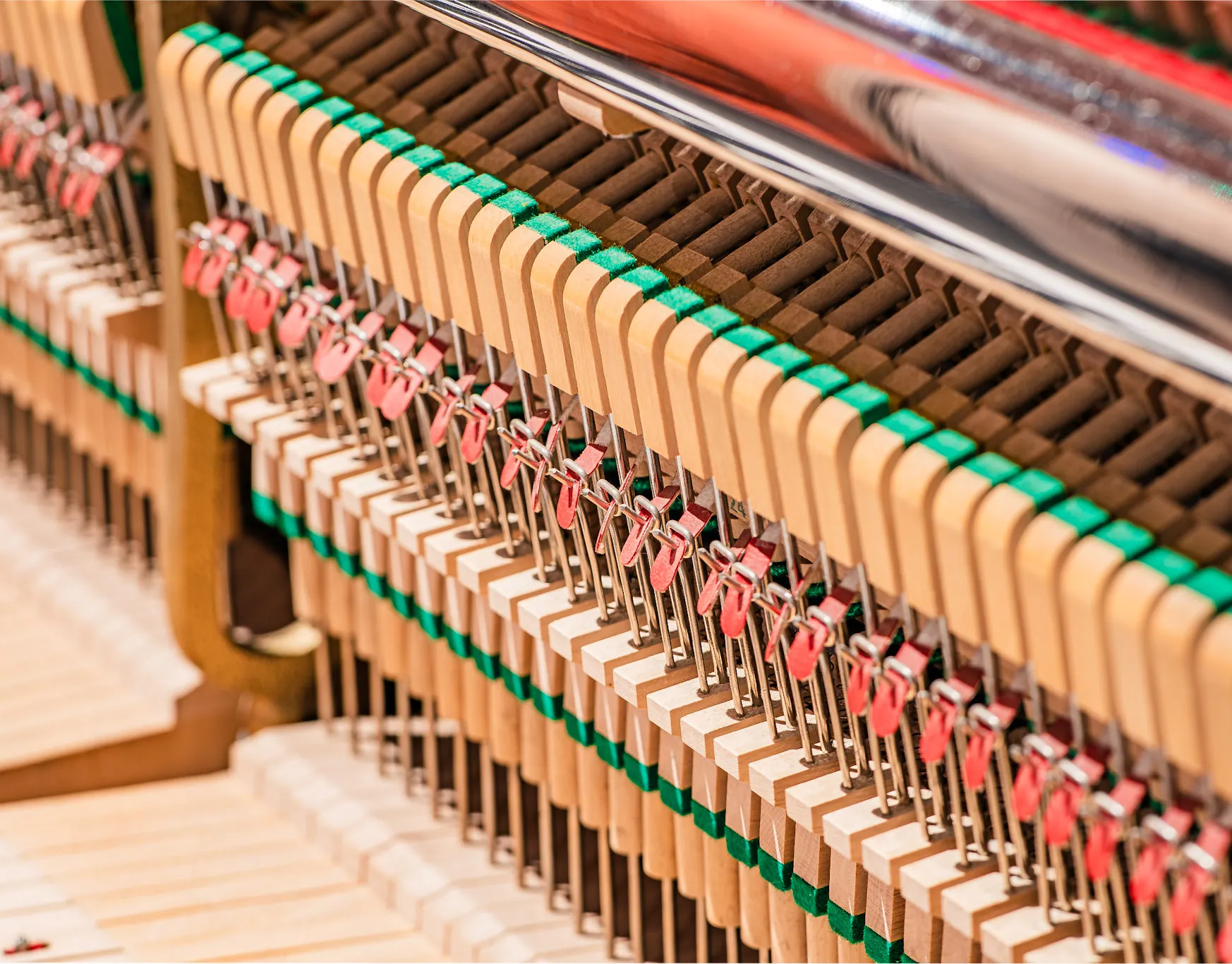
What a damper does
Every note has a damper: a felt pad that rests on the string. When you press a key, the hammer swings up to strike the string and the damper lifts away so the note can ring. When you let the key go, the damper falls back onto the string and the note stops.
The two designs differ in where the dampers sit: below the hammers, or above them.
Under-damper pianos
In an under-damper piano the dampers sit underneath the hammers. Under-damper pianos have been made for around 100 years, and they are what to look for when you buy a second-hand upright.
Over-damper pianos
In an over-damper piano the dampers sit above the hammers. It is the older design, so an over-damper piano is well over 100 years old: a true antique.
How to tell which one you have
Open the lid and look down at the action. Find the row of felt hammer heads, then the row of damper felts resting on the strings. If the dampers are below the hammers, it is an under-damper piano. If they are above the hammers, it is an over-damper.
Is an over-damper piano worth buying?
Benni recommends against it. The under-damper design has been the standard for around 100 years, so any over-damper piano still in use is older than that and very likely near the end of its usable life. Its pins, soundboard and frame have to withstand a total string tension of around 20 tonnes, which can't be expected of a piano that age, so keeping one playable takes a great deal of work, which the value of the instrument rarely justifies. If you are choosing between pianos, an under-damper upright is the better buy.
For what else to check before you buy, see buying a second-hand piano, or have Benni look at it for you: a pre-purchase inspection is $90 + GST.
Book a tuning
New customers welcome. Call or send a message and Benni will find a time that suits you, evenings and weekends included. $190 + GST, with travel included across Wellington, Lower Hutt, Upper Hutt, Porirua and Kāpiti.